Learning Hub
Marble Countertops and Interior Design: Why Marble Remains the Ultimate Luxury Surface
The Timeless Appeal of Marble in Interior Design
For centuries, marble has been synonymous with luxury, sophistication, and architectural excellence. From ancient temples and sculptures to today’s most stunning residential and commercial interiors, marble continues to be one of the most sought-after natural stones in the world.
Interior designers consistently specify marble because it offers something no manufactured material can truly replicate: authentic natural beauty. Every slab is unique, featuring distinctive veining, movement, and color variations created by geological processes that occurred millions of years ago.
Whether incorporated into a luxury bathroom, statement fireplace, feature wall, or decorative accent, marble delivers a level of elegance that instantly elevates any space.
What Is Marble?
Marble is a natural metamorphic stone formed when limestone is subjected to intense heat and pressure deep within the earth’s crust. Over time, the original limestone recrystallizes, creating a dense and durable stone characterized by its beautiful veining patterns and rich color variations.
This natural formation process is what makes marble so unique. Unlike engineered materials that are manufactured to look consistent, marble develops organically, ensuring that every slab possesses its own personality and visual story.
Designers often choose marble because it introduces movement, depth, and visual interest that cannot be duplicated by man-made surfaces. Its natural character allows spaces to feel both luxurious and authentic.
The Global Origins of Marble
One of marble’s most fascinating qualities is its geographic diversity. Marble is quarried throughout the world, with each region producing distinctive colors, patterns, and characteristics.
Some of the most celebrated marble-producing regions include:
Italy
Italy is widely regarded as the birthplace of the world’s most prestigious marble. Italian quarries produce iconic varieties known for their bright white backgrounds and dramatic veining patterns.
Greece
Greek marble has been prized since ancient times and remains highly sought after for its refined appearance and historical significance.
Turkey
Turkey offers a wide variety of marble colors and patterns, making it one of the largest marble suppliers in the global market.
India
Indian marble provides unique colors and dramatic movements that appeal to designers seeking distinctive statement materials.
The geological conditions of each region influence the stone’s appearance, creating endless design possibilities for architects and interior designers.
Marble’s Legacy in Architecture and Design
Few materials can match marble’s historical significance.
Ancient civilizations used marble to construct temples, monuments, sculptures, and palaces that continue to stand today. The material became a symbol of wealth, artistry, and permanence, often reserved for the most important structures and works of art.
Many of the world’s most recognizable architectural masterpieces feature marble prominently. Its association with luxury and craftsmanship has remained consistent throughout history, making it a timeless specification for modern interiors.
Today’s designers continue this tradition by incorporating marble into contemporary spaces that balance classic elegance with modern functionality.
Why Interior Designers Love Marble
Marble remains a favorite among interior designers for several reasons:
Unmatched Natural Beauty
Every marble slab is completely unique. Natural veining, color transitions, and movement create one-of-a-kind surfaces that become focal points within a room.
Timeless Design Appeal
Unlike trends that come and go, marble has remained desirable for thousands of years. Its classic appearance ensures long-term aesthetic value.
Design Versatility
Marble works beautifully across a wide range of design styles, including:
- Traditional interiors
- Transitional spaces
- Contemporary homes
- Modern luxury projects
- European-inspired designs
- Boutique hospitality environments
Increased Property Value
Luxury natural stone surfaces are often viewed as premium upgrades that can contribute to a property’s perceived value and market appeal.
Best Applications for Marble in Interior Design
While marble can be used in many ways throughout a home or commercial project, certain applications showcase its beauty particularly well.
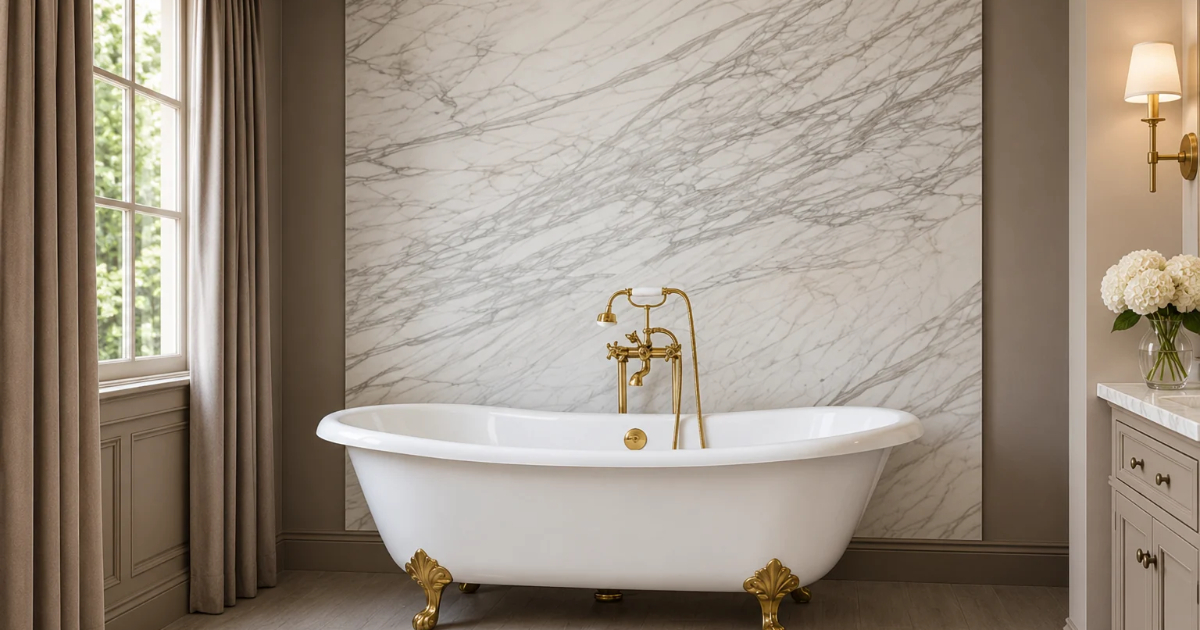
Marble Bathrooms and Vanity Tops

Bathrooms are among the most popular spaces for marble installation.
The stone’s elegant appearance creates a spa-like atmosphere that immediately enhances the sense of luxury. Marble vanity tops provide sophisticated visual appeal while offering excellent durability when properly maintained.
Popular bathroom applications include:
- Vanity countertops
- Shower surrounds
- Accent walls
- Tub surrounds
- Decorative niches
- Integrated sinks
Designers often use marble to create cohesive, high-end bathroom environments that feel timeless rather than trend-driven.
Marble Fireplace Surrounds
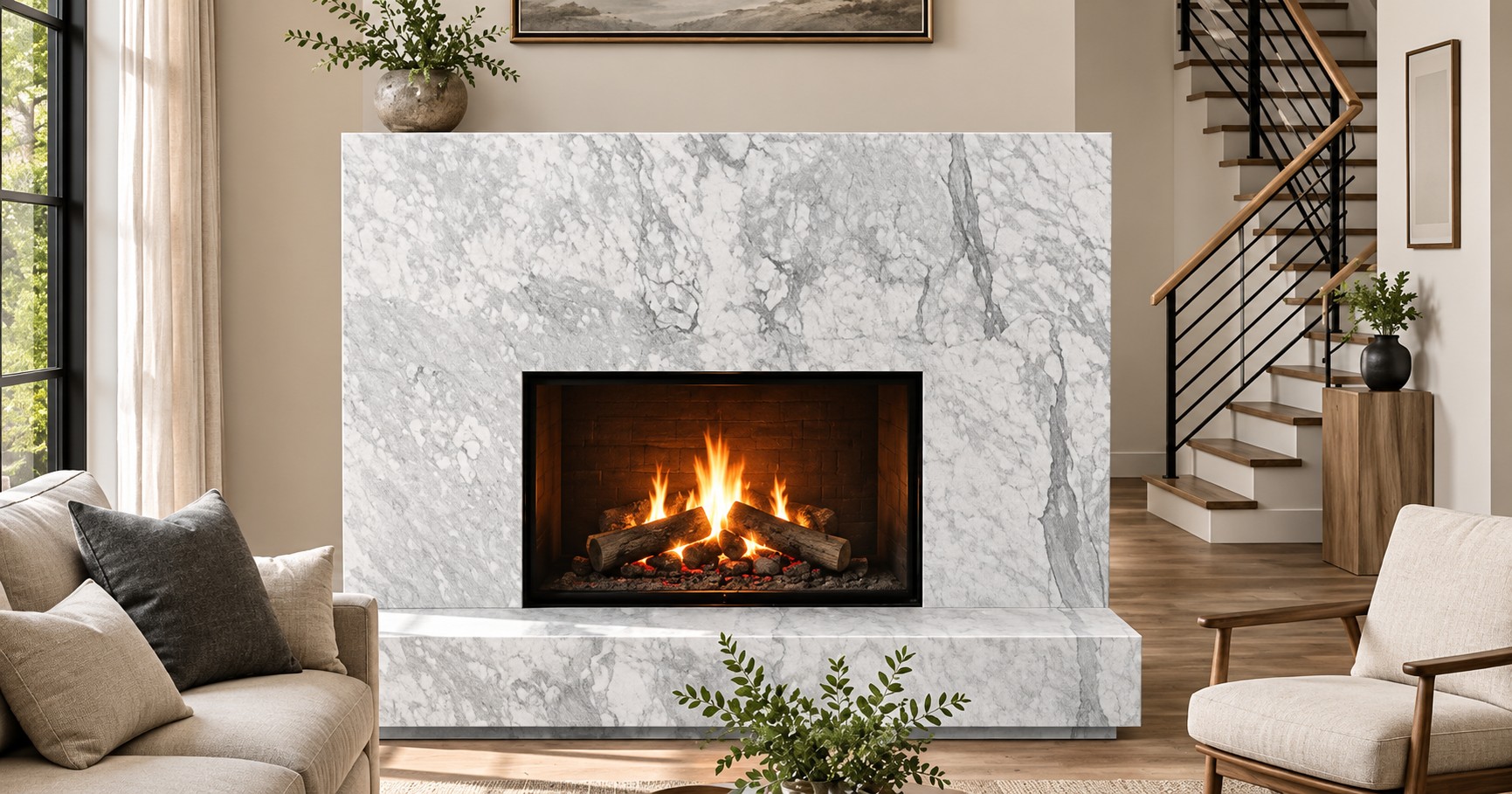
A marble fireplace instantly becomes the centerpiece of a living room, great room, or master suite.
Marble’s natural heat resistance makes it an excellent choice for fireplace surrounds and mantels. Whether the design calls for dramatic veining or subtle elegance, marble adds architectural significance and visual impact.
Contemporary designers frequently use large-format marble slabs to create seamless fireplace features that maximize the stone’s natural beauty.
Marble Feature Walls
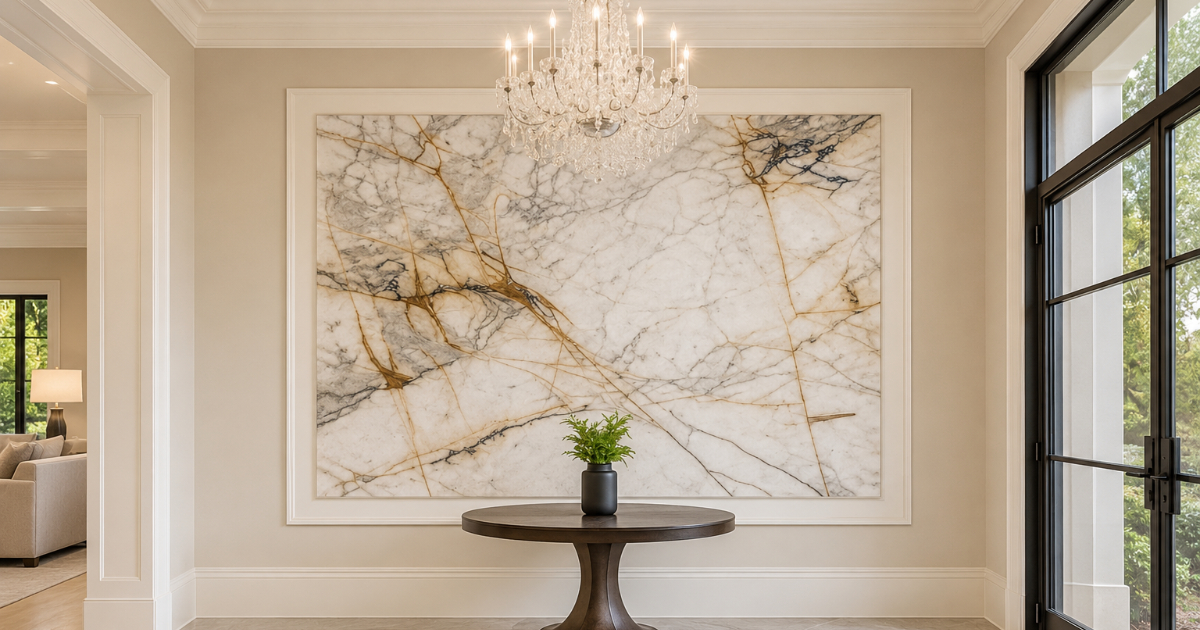
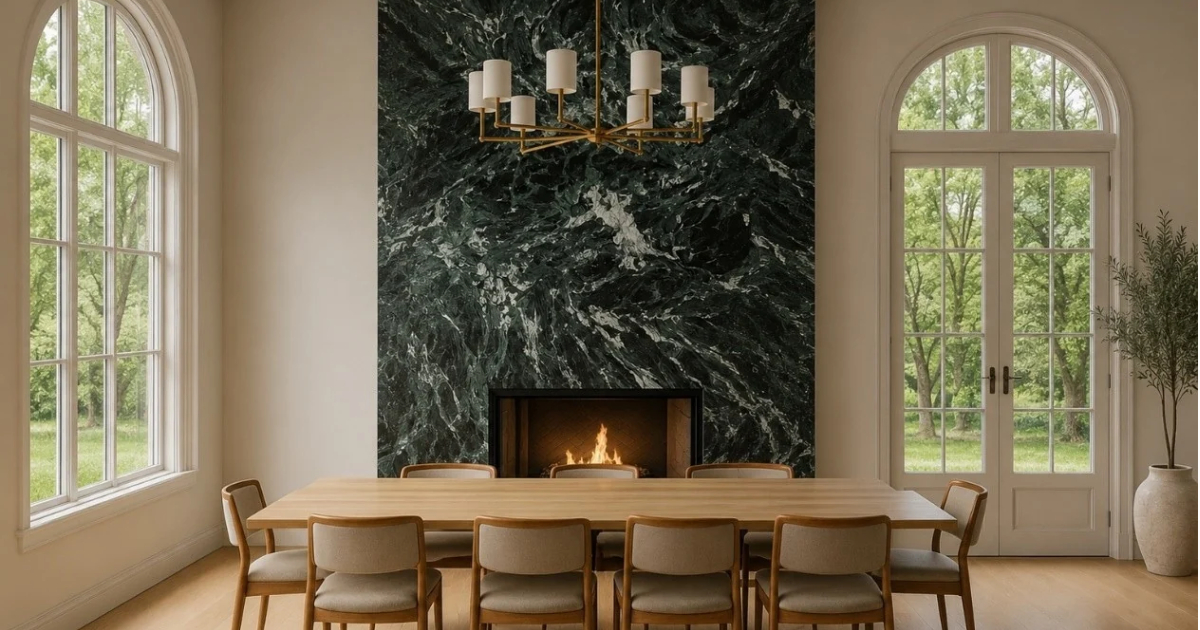
Feature walls offer designers an opportunity to showcase the dramatic movement found within marble.
Applications may include:
- Living room accent walls
- Dining room focal points
- Hotel lobby installations
- Reception areas
- Master bedroom statement walls
By using marble vertically, designers can transform a functional surface into a piece of natural artwork.
Decorative Architectural Elements
Marble is also commonly incorporated into:
- Columns
- Niches
- Staircase details
- Furniture accents
- Wall cladding
- Decorative trim features
These applications allow designers to introduce luxury without overwhelming the overall design aesthetic.
Popular Marble Colors and Styles
One of marble’s greatest strengths is its incredible range of colors and patterns.
Calacutta Vagli Marble
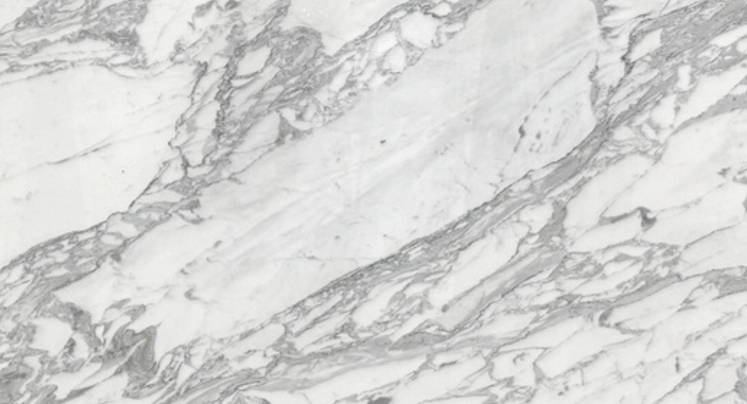
Perhaps one of the most recognizable marble varieties, Calacatta Vagli features a bright white background accented by bold grey veining.
Its dramatic appearance makes it a favorite among luxury residential designers and architects seeking a sophisticated statement material.
Crema Marfil Marble
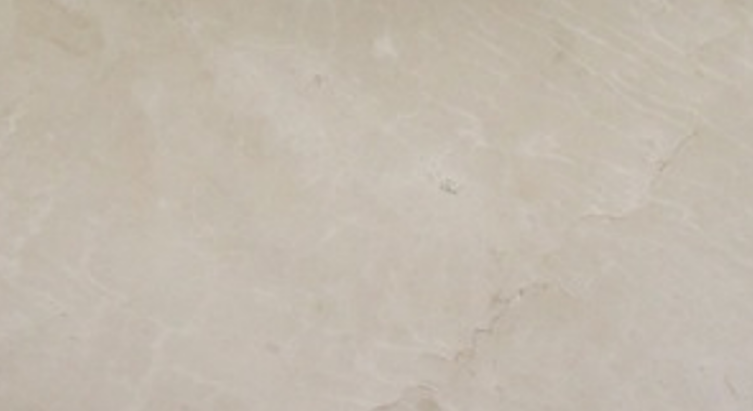
Crema Marfil offers warm beige and honey tones with subtle veining.
Its softer appearance makes it ideal for projects that prioritize warmth and understated elegance while maintaining a luxurious feel.
Nero Marquina Marble
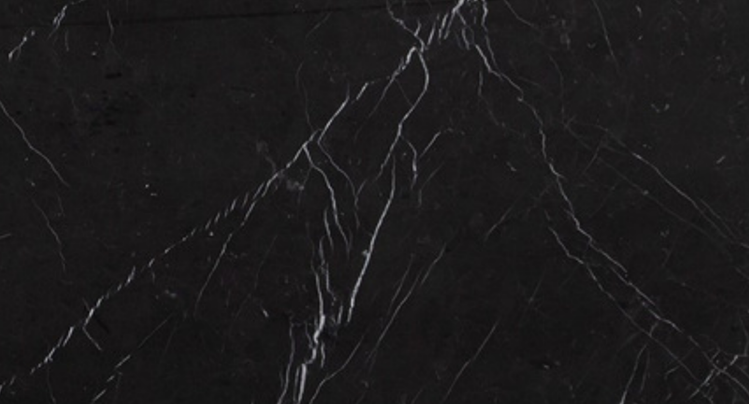
For dramatic contrast, Nero Marquina delivers a striking black background highlighted by crisp white veining.
This bold marble variety is frequently used in modern luxury interiors, hospitality projects, and statement feature applications.
Beyond White Marble
Many designers are surprised by marble’s broad range of available colors, including:
- Soft greys
- Warm beiges
- Rich golds
- Deep greens
- Dramatic blacks
- Unique blues
This diversity allows marble to complement virtually any design palette and aesthetic direction.
Caring for Marble Surfaces
While marble is durable and long-lasting, proper care is essential for preserving its beauty.
Fortunately, maintaining marble is straightforward when clients understand a few basic guidelines.
Daily Cleaning
For routine maintenance:
- Use a soft microfiber cloth
- Clean with pH-neutral stone cleaners
- Mild dish soap and water are often sufficient
- Avoid abrasive scrubbing pads
Gentle cleaning helps preserve the stone’s natural finish and appearance.
Avoid Acidic Products
One of the most important aspects of marble care is avoiding acidic substances.
Products that can damage marble include:
- Vinegar
- Lemon juice
- Bleach
- Ammonia
- Harsh household cleaners
These substances can cause etching and dull the stone’s polished surface.
Address Spills Immediately
Because marble is naturally porous, spills should be addressed promptly.
Designers should educate homeowners to blot—not wipe—spills from:
- Wine
- Coffee
- Citrus juices
- Oils
- Colored beverages
Quick action helps minimize the potential for staining.
Seal Marble Regularly
A high-quality penetrating sealer provides additional protection against moisture and staining.
Most marble surfaces benefit from resealing every 6 to 12 months, depending on usage and environmental conditions.
Why Marble Continues to Define Luxury Interiors
In a marketplace filled with engineered alternatives and imitation materials, marble remains the benchmark of natural luxury.
Its unique combination of beauty, history, craftsmanship, and exclusivity continues to attract architects, interior designers, and discerning homeowners around the world.
No two slabs are identical. No manufactured product can perfectly replicate its depth and character. Every installation becomes a one-of-a-kind design feature that reflects the artistry of nature itself.
For designers seeking materials that create lasting impressions, marble offers a timeless solution that transcends trends and generations.
Final Thoughts
Marble has earned its reputation as one of the world’s most prestigious natural stones. From elegant bathroom vanities and dramatic fireplace surrounds to breathtaking feature walls and architectural accents, marble brings sophistication and authenticity to every project it touches.
Its rich history, global origins, and unparalleled beauty make it a favorite among interior designers who value both aesthetics and longevity. When properly specified and maintained, marble becomes more than a surface—it becomes a defining design element that elevates the entire space.
For luxury residential and commercial interiors, marble remains one of the most powerful materials available, continuing to inspire designers and captivate client’s generation after generation.